
Transformers, Bombs, and Blind Spots

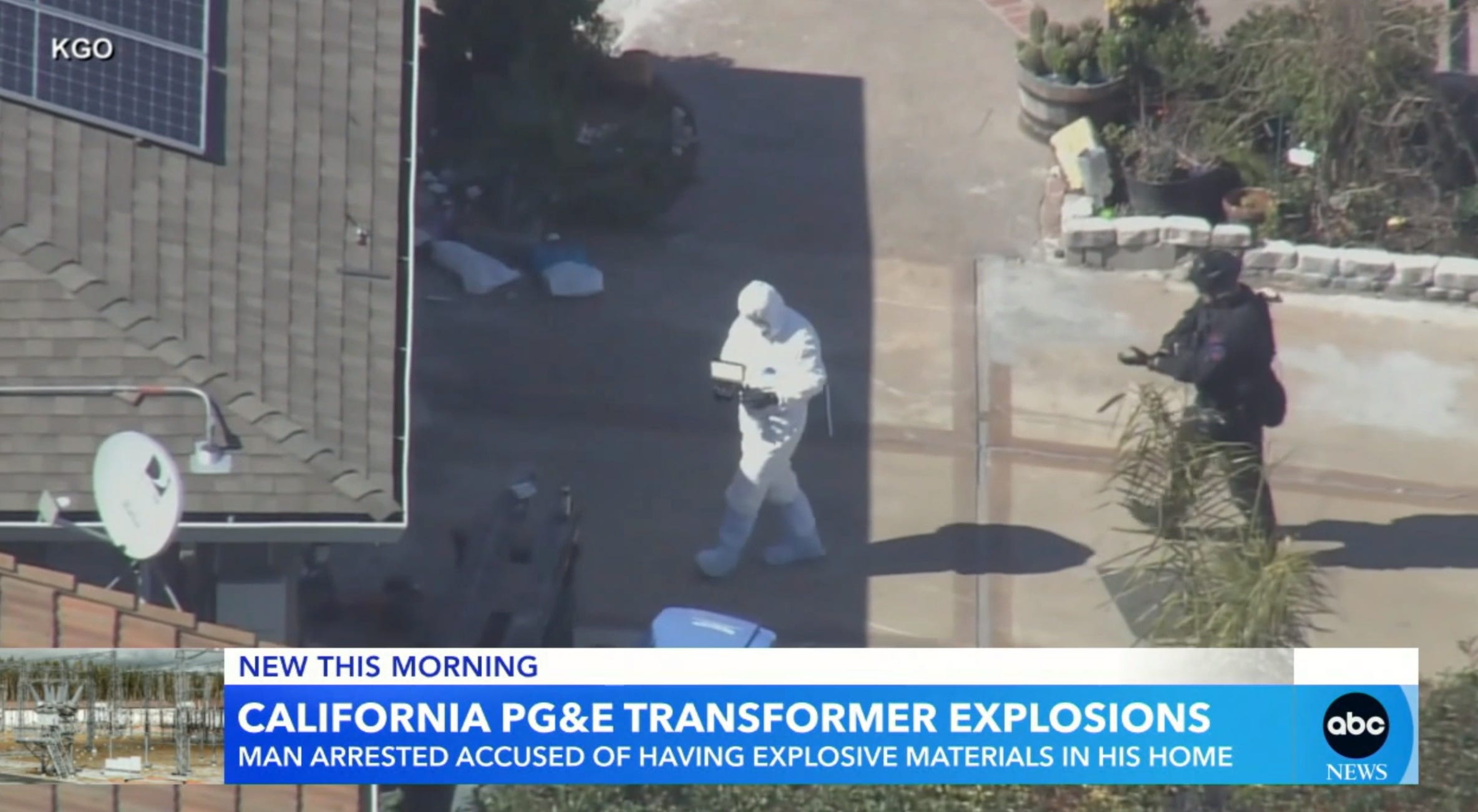
In December 2025, a federal judge handed a California engineer a 10-year sentence for bombing two PG&E transformers in San Jose, attacks that blacked out more than a thousand customers and drove months of multi-agency work to unspool how the devices were chosen, built, and placed, according to the U.S. Department of Justice.
The Case
On December 17, 2025, the Justice Department announced that 39-year-old engineer Peter Karasev was sentenced to 10 years in federal prison, plus restitution, for willful destruction of an energy facility, following guilty pleas tied to two bombings that struck in December 2022 and January 2023, according to the Justice Department and local reporting.
According to CBS News Bay Area, prosecutors said the explosions hit near the Westfield Oakridge Mall on December 8, 2022, and near the Plaza Del Rey shopping center on January 5, 2023, cutting power for up to 16 hours in the first incident.
The Attacks
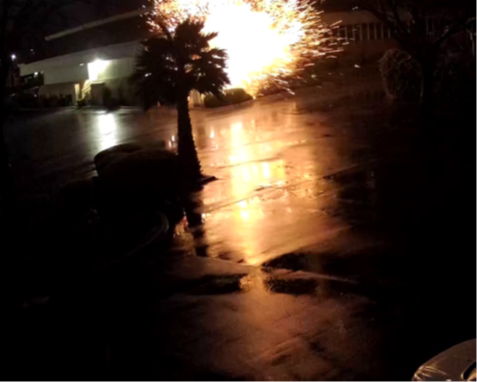
The devices were homemade, the targets were distribution-level transformers, and the effect was immediate, lights out and rapid load shedding that rippled through retail and residential blocks.
According to SFGATE and the San Francisco Chronicle, the damage surpassed $200,000 and affected roughly 1,450 to 1,500 customers, including some with life-sustaining medical needs.
According to ABC News, investigators tied the two crime scenes together by timing, signature, and the selection of accessible equipment in public-facing commercial corridors.
The Actor
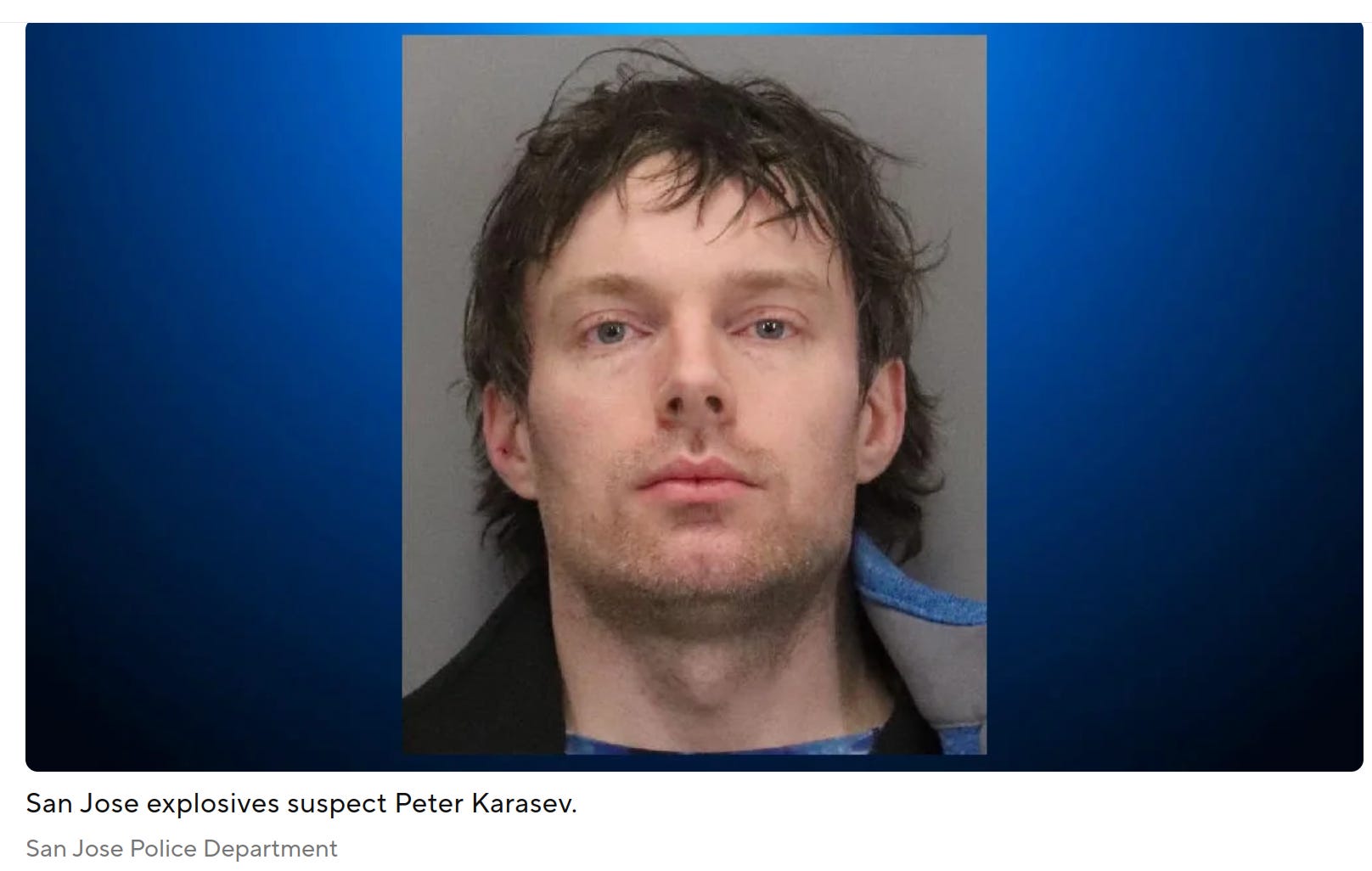
Karasev was an experienced software engineer who had previously worked in the autonomous vehicle sector. According to SFGATE and the Chronicle, he researched explosives and critical-infrastructure vulnerabilities, then transitioned that research into operational steps.
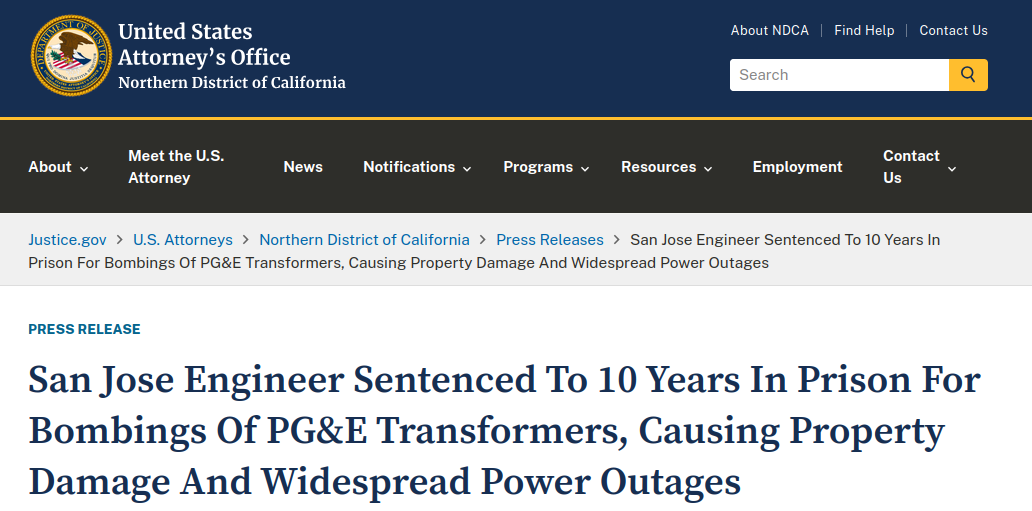
According to the Justice Department, federal officials underscored that his technical background amplified the risk profile. As Assistant Attorney General for National Security officials put it in the charging and sentencing materials, specialized knowledge plus access to materials can convert curiosity into capability.
“This 10-year federal prison sentence reflects the seriousness of using explosive devices to attack our power grid and the real-world consequences of those choices.”
Aftermath & Potential
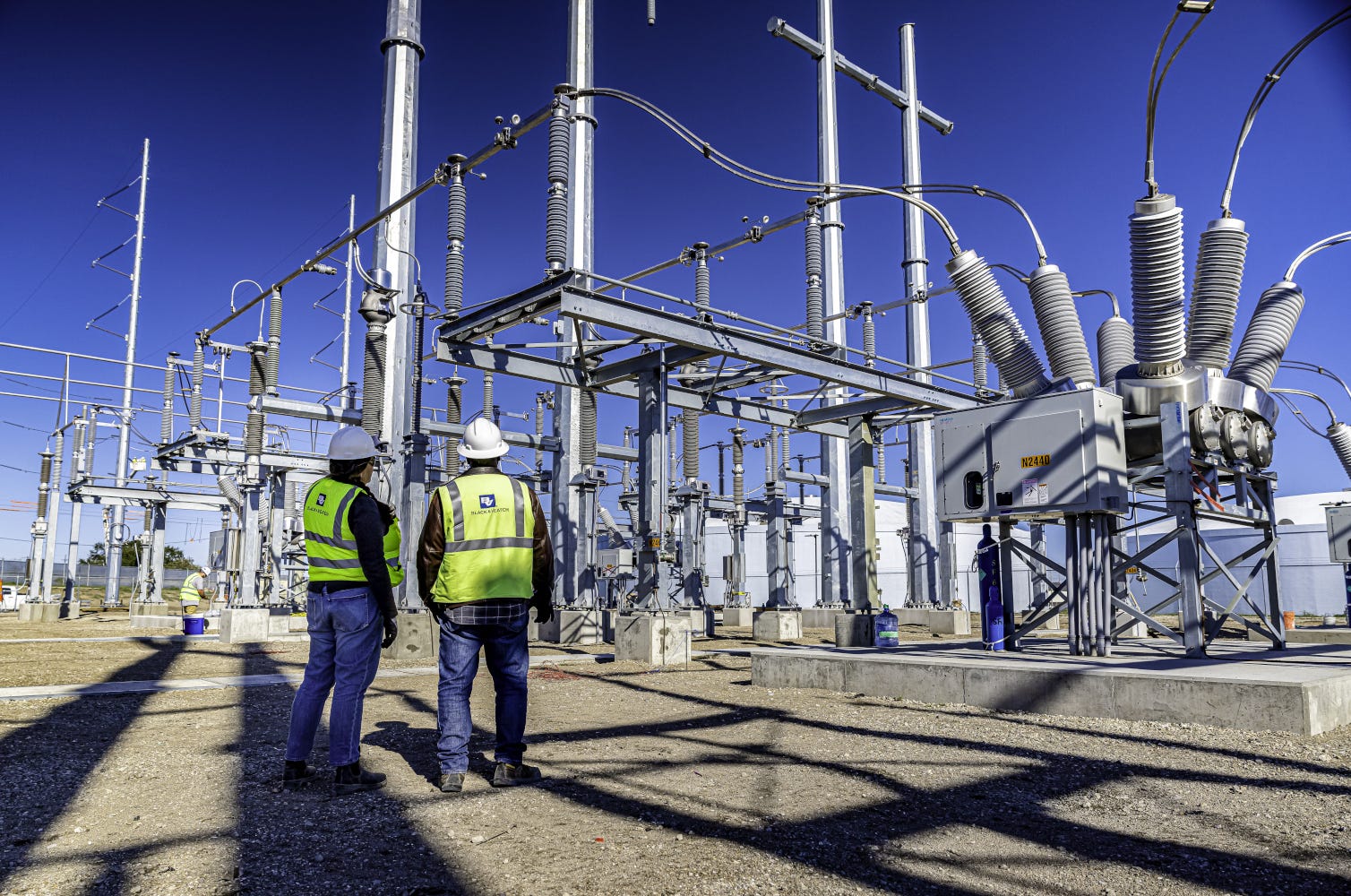
The first blast near Westfield Oakridge cut power to nearly 1,500 customers for almost 16 hours, the second near Plaza Del Rey hit dozens more, according to ABC News and CBS News Bay Area.
Direct losses topped two hundred thousand dollars, with fifteen Medical Baseline households among those affected, according to the Justice Department and local reporting.
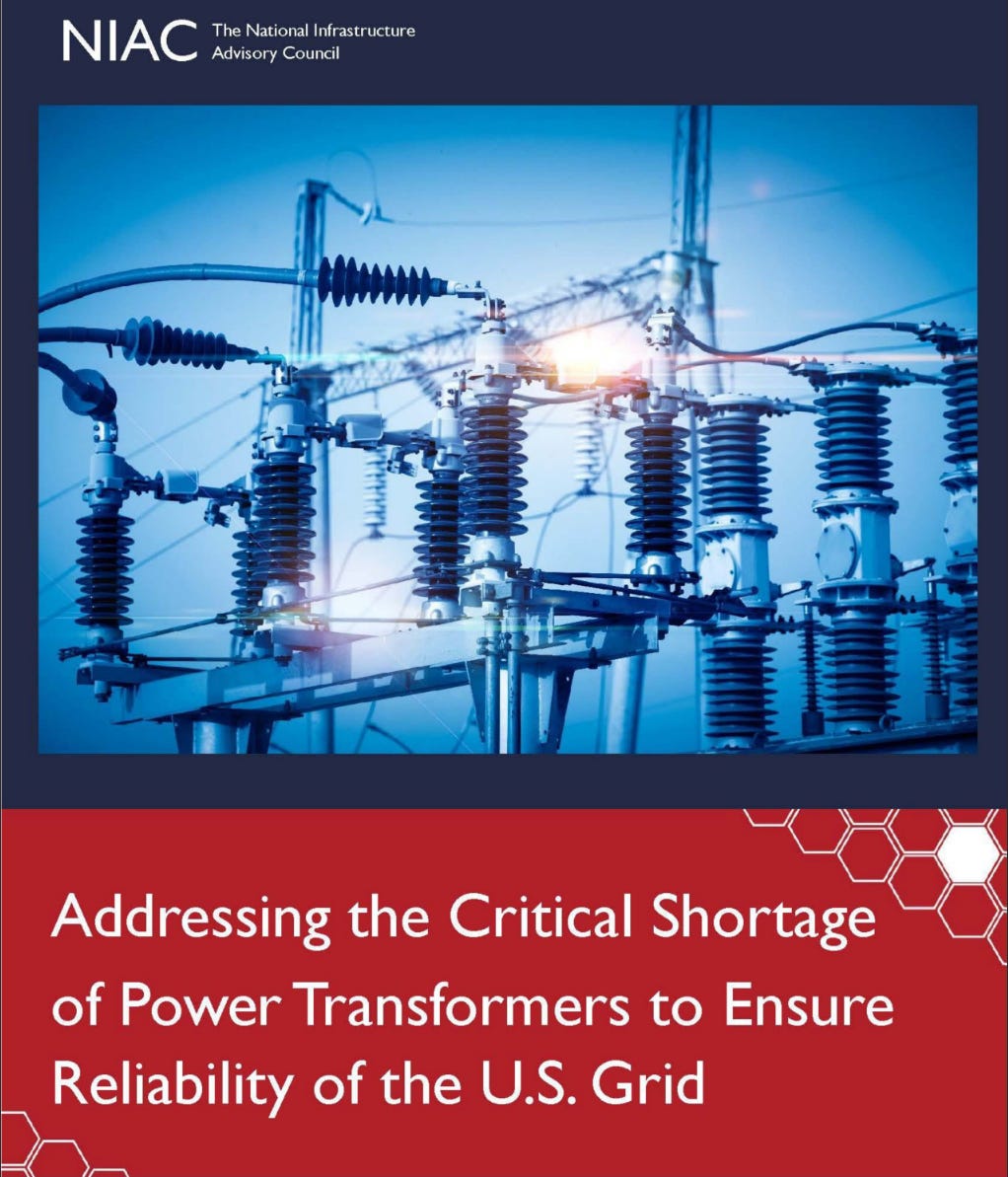
If accomplices had struck in parallel, the math changes fast. Utilities plan for N-1, one asset down and the grid rides through, but coordinated hits push you toward N-2 where redundancy collapses, restoration stretches to days, and if a high-voltage substation transformer is destroyed, you are looking at scarce spares and replacement lead times of 36 to 60 months, according to the Department of Energy and the National Infrastructure Advisory Council. The human impact scales nonlinearly, hours become days, neighborhoods become districts, and outage management becomes a supply-chain problem as much as a field-crew problem.
Conclusion
The San Jose transformer bombings were not the largest critical-infrastructure attack this decade, but they are a clear case study in how everyday assets become targets and how layered detection beats improvisation.
The actor chose equipment that people ignore, used devices most people can research, and achieved outsized disruption. Investigators answered with fundamentals, cameras, signatures, and search warrants, then prosecutors locked in a narrative through a guilty plea and a 10-year sentence.
For defenders, the assignment is specific, harden sidewalks, choreograph your camera neighbors, instrument your grid for anomalies, and treat everything ordinary as if someone is already studying it.